
Every parent wants to give their child the best start in life, but many don’t realize that the answer might be hiding in plain sight during daily play sessions.
Play is not just entertainment for children – it serves as a powerful foundation for developing critical thinking, problem-solving skills, creativity, and social abilities that will benefit them throughout their lives.
Research shows that children learn best when they’re engaged and having fun.
Playtime is the perfect opportunity to build essential skills without the pressure of traditional learning methods.
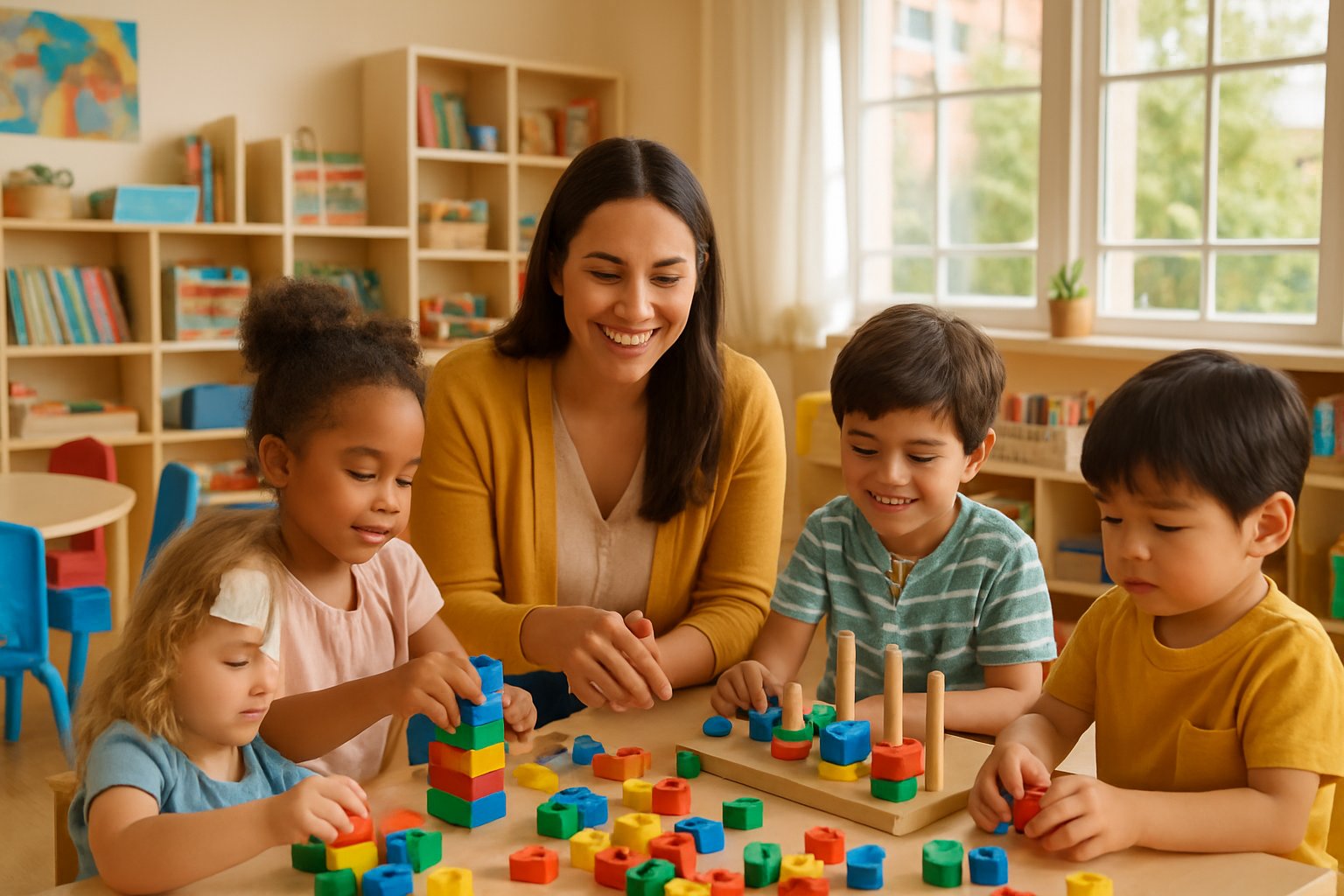
Transforming ordinary play into educational experiences doesn’t require expensive toys or complicated setups.
Simple activities like themed play sessions, sensory exploration, and interactive games can turn any living room into a learning laboratory.
Parents can easily incorporate math concepts during cooking time, build language skills through storytelling, or develop scientific thinking with basic experiments using household items.
The key lies in understanding that play is not a break from learning – it is learning itself.
When children engage in purposeful play, they naturally develop cognitive abilities, improve social skills, and build confidence in a stress-free environment.
Key Takeaways
- Play naturally develops critical thinking, creativity, and social skills that children need for lifelong success
- Simple household activities can be transformed into powerful learning experiences without expensive materials
- Children learn best through engaging, fun activities that create positive associations with education
The Power of Play: Foundations for Learning
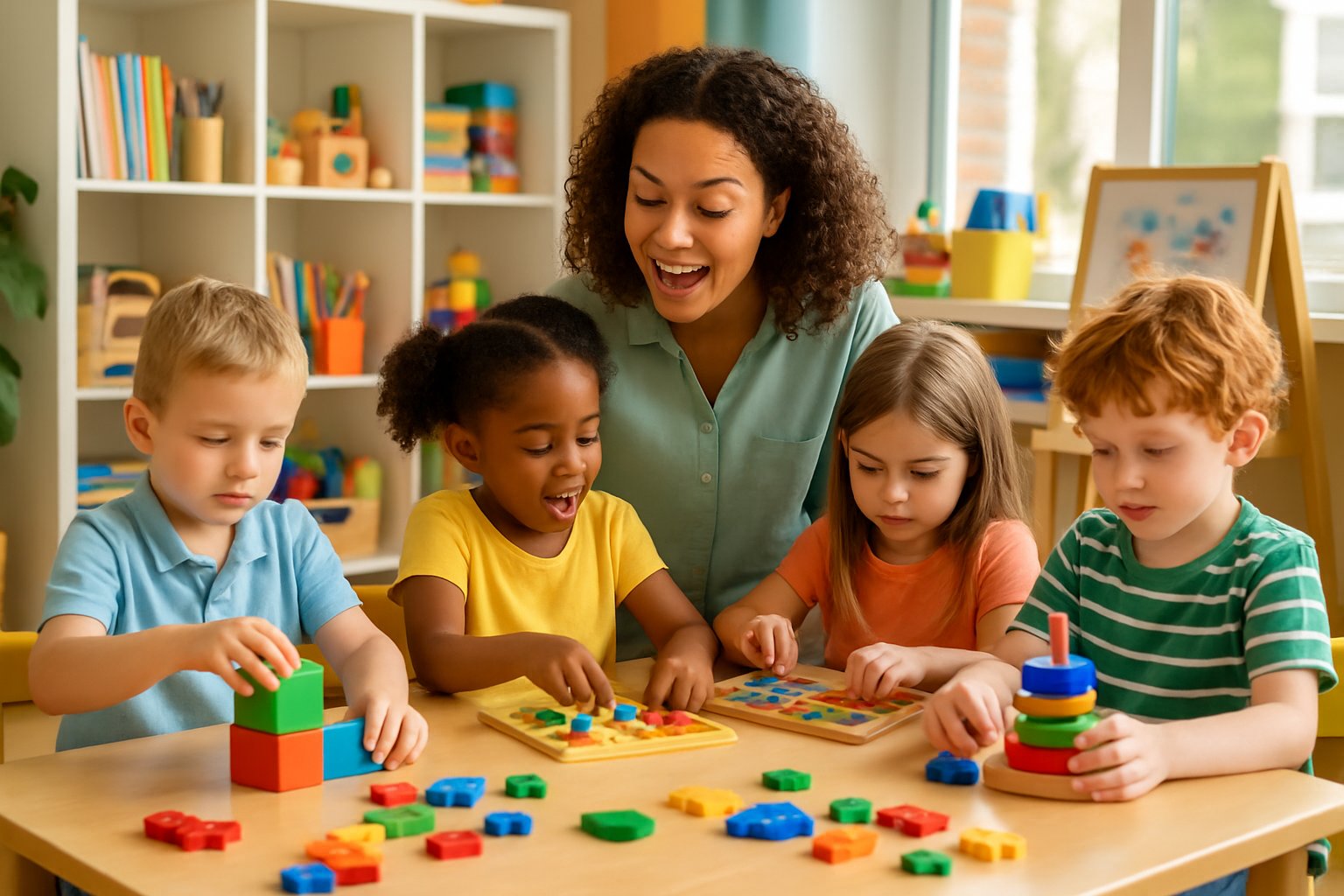
Play forms the cornerstone of child development, transforming everyday activities into powerful learning experiences.
Research shows that play builds motor competence and confidence while establishing critical foundations for lifelong learning preferences.
Understanding Play-Based Learning
Play-based learning operates on a spectrum that ranges from child-directed activities to structured educational games.
This approach recognizes that children naturally learn through exploration and discovery.
Types of Play-Based Learning:
- Free Play: Child-directed activities with minimal adult involvement
- Guided Play: Teacher-supported activities with specific learning goals
- Educational Games: Structured activities that combine fun with targeted skills
Playful learning leverages children’s natural curiosity to experiment and explore.
Teachers act as guides rather than instructors, supporting active discovery.
Research demonstrates that guided play often produces better learning outcomes than free play alone.
Children develop stronger vocabulary and spatial skills when teachers provide gentle direction within playful contexts.
The key lies in balancing child agency with intentional learning objectives.
This creates meaningful experiences that feel natural to children while achieving educational goals.
Key Benefits of Playtime for Child Development
Playtime delivers benefits across multiple developmental domains simultaneously.
Physical play develops both fine and gross motor skills essential for future activities.
Cognitive Development Benefits:
- Enhanced problem-solving abilities
- Improved memory and attention span
- Stronger executive function skills
- Better spatial reasoning
Social-Emotional Growth:
- Increased cooperation and sharing
- Better conflict resolution skills
- Enhanced emotional regulation
- Stronger peer relationships
Motor skill development through play creates confidence for more active participation.
Children who master basic movements show greater willingness to engage in physical activities later.
Language and literacy skills flourish during dramatic play scenarios.
Children practice communication, storytelling, and vocabulary in natural contexts.
Play also supports mathematical thinking through counting games, pattern recognition, and spatial exploration.
These early experiences build number sense and logical reasoning.
The Role of Playful Learning in Early Years
Early childhood educators increasingly recognize playful learning as a powerful teaching tool that aligns with how young children naturally develop.
This approach contrasts sharply with rigid, skill-focused curricula.
Playful learning environments create culturally relevant experiences that engage all children.
Teachers can address individual learning styles while maintaining group cohesion.
Effective Implementation Strategies:
- Design learning centers with clear objectives
- Provide varied materials for exploration
- Ask open-ended questions during play
- Document learning through observation
The teacher’s role shifts from information deliverer to learning facilitator.
They create rich environments where children construct understanding through hands-on experiences.
Play must be repositioned as a right rather than a privilege for all children regardless of background.
This ensures equitable access to developmentally appropriate learning opportunities.
Quality early childhood programs offer experiences across the entire play spectrum.
This balanced approach maximizes both immediate engagement and long-term educational outcomes.
Setting Up the Ultimate Playful Learning Environment
The right environment balances physical safety with mental stimulation while giving children both independence and guidance.
Smart space design paired with the right mix of activities creates conditions where learning happens naturally through play.
Designing a Safe and Stimulating Play Space
Safety comes first when creating an effective play-based learning environment.
Parents should secure furniture to walls and cover electrical outlets.
Sharp corners need padding or guards.
Good lighting helps children see clearly during activities.
Natural light works best, but bright LED lights can supplement darker areas.
Key Safety Elements:
- Non-slip rugs on smooth floors
- Rounded furniture edges
- Easy-to-clean surfaces
- Age-appropriate materials only
Storage bins should sit at child height so kids can reach educational toys independently.
Clear containers work better than solid ones because children see what’s inside.
The space needs different zones for various activities.
A quiet reading corner with soft cushions encourages calm focus.
An open area allows for movement and building games.
Educational toys should rotate weekly to maintain interest.
Too many choices overwhelm young learners.
Five to seven toys per area creates the right balance.
Temperature control matters more than most parents realize.
Rooms that are too hot make children sleepy, while cold spaces distract from learning activities.
Balancing Free Play and Guided Activities
Free play gives children complete control over their choices and imagination.
This unstructured time helps develop creativity and problem-solving skills.
Children need at least 60 minutes of free play daily.
During free play, adults should stay nearby but avoid directing activities.
Kids learn best when they discover solutions on their own.
Guided activities work differently by teaching specific skills or concepts.
These might include counting games, letter recognition, or science experiments.
Daily Schedule Balance:
- Morning: 30 minutes guided learning
- Mid-morning: 45 minutes free play
- Afternoon: 20 minutes guided activities
- Late afternoon: 60 minutes free play
The key lies in following the child’s natural energy patterns.
Most children focus better on structured learning in the morning when they feel fresh.
Playtime should flow naturally between guided and free activities.
When children show interest in a guided activity, let them explore longer.
If they seem restless, switch to free play immediately.
Parents can prepare guided activities but should never force participation.
The goal is making learning feel like play, not turning play into work.
Building Core Skills Through Play
Play naturally develops language abilities and social connections that children need for success.
These skills form the foundation for communication and teamwork throughout life.
Boosting Language and Communication Skills
Play creates countless opportunities for children to practice speaking, listening, and understanding language.
During pretend play, kids naturally expand their vocabulary as they take on different roles and scenarios.
Storytelling games help children organize their thoughts and express ideas clearly.
When kids create stories with toys or act out scenes, they practice using descriptive words and proper sentence structure.
Interactive games like “Simon Says” or “I Spy” teach children to follow verbal instructions and communicate specific details.
These activities strengthen listening skills and help kids learn to give clear directions to others.
Reading together during quiet play time improves vocabulary and comprehension skills.
Children learn new words in context and practice asking questions about stories they hear.
Musical activities support language development through rhythm and rhyme.
Singing songs, clapping to beats, and making up rhymes help children understand how language sounds and flows.
Board games that require players to read cards or explain moves give children practice with both reading skills and verbal communication in a fun, low-pressure setting.
Promoting Social Skills and Cooperation
Building social skills through play happens naturally when children interact with others during games and activities.
Group play teaches kids how to share, take turns, and work as a team.
Team-based games require children to communicate with partners and coordinate their actions.
These activities show kids how to compromise and make decisions together.
Waiting for turns during playground activities like slides teaches patience and self-control.
Children learn to respect others and follow social rules without adult direction.
Role-playing games help children understand different perspectives and practice empathy.
When kids pretend to be teachers, parents, or community helpers, they learn about various social roles and responsibilities.
Group art projects and building activities require children to share materials and space.
These experiences teach negotiation skills and help kids learn to resolve conflicts peacefully.
Family game nights strengthen relationship skills through open communication and bonding between family members.
Encouraging Cognitive Development with Play
Play activities that challenge children’s minds help build essential thinking skills and spatial understanding.
These experiences create strong foundations for academic success and daily problem-solving abilities.
Fostering Problem-Solving Skills
Children develop critical thinking and problem-solving abilities through hands-on play experiences.
These skills form the backbone of cognitive development.
Building Block Activities
- Stack different shaped objects to create towers
- Sort toys by color, size, or function
- Complete age-appropriate puzzles with increasing difficulty
Strategy Games help children think ahead and plan moves.
Board games like checkers or simple card games teach logical reasoning.
Children learn to consider multiple options before making decisions.
Cause and Effect Play shows children how actions create results.
Water play teaches children that pouring creates flow patterns.
Simple machines like ramps and pulleys demonstrate basic physics concepts.
Open-Ended Challenges encourage creative solutions.
Give children materials like cardboard boxes, tape, and scissors.
Ask them to build something specific like a bridge or house.
This type of play has no single correct answer.
Science experiments during playtime spark curiosity and logical thinking.
Simple activities like mixing colors or growing plants teach observation skills.
Enhancing Spatial Awareness
Spatial awareness helps children understand how objects relate to each other in space. This skill supports math learning and daily navigation tasks.
Physical Movement Games build spatial understanding through body awareness. Children learn concepts like over, under, beside, and through.
Dancing and obstacle courses develop these skills naturally.
Construction Play with blocks, LEGOs, or magnetic tiles teaches three-dimensional thinking. Children learn to visualize how pieces fit together before building.
| Spatial Activity | Skills Developed |
|---|---|
| Puzzle completion | Visual-spatial processing |
| Building with blocks | 3D visualization |
| Shape sorting | Geometric understanding |
| Drawing and art | Spatial relationships |
Navigation Games help children understand direction and location. Hide-and-seek teaches children to think about space from different viewpoints.
Treasure hunts require children to follow directions and understand maps.
Art and Drawing Activities develop spatial skills through visual creation. Children learn about shapes, sizes, and how objects appear from different angles.
Clay mo