
Many parents struggle to keep their toddlers happy and engaged without turning to tablets or TV shows. The secret lies in using simple activities that spark curiosity, encourage movement, and tap into a child’s natural desire to explore and create.
These activities don’t require expensive toys or complicated setups.
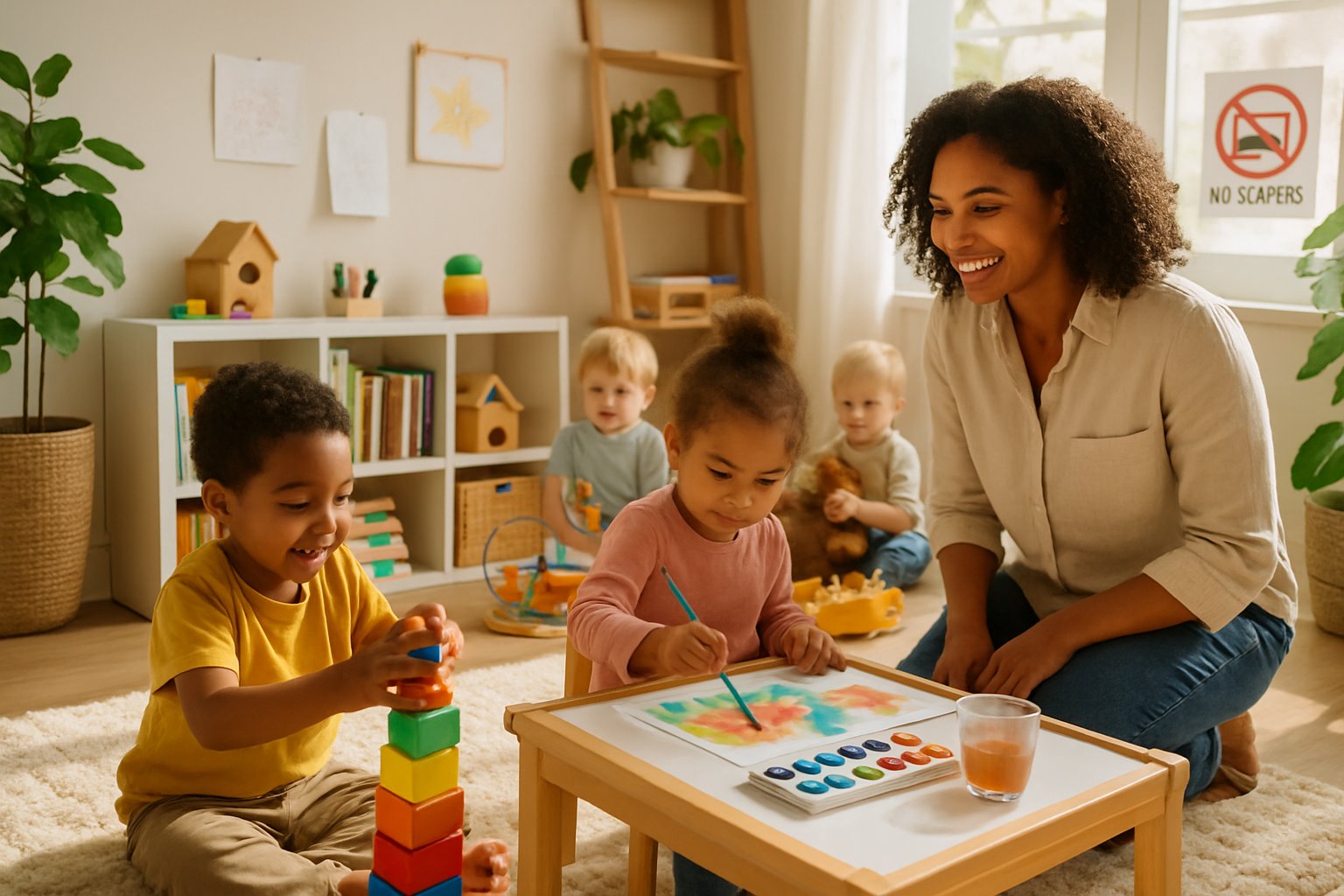
Too much screen time can make toddlers cranky and affect their development. Screen-free activities help children develop essential life skills while keeping them entertained.
Parents can use everyday items and simple games to create fun experiences that hold their child’s attention. The best part about these strategies is that they work with what toddlers already love to do.
They enjoy making messes, moving their bodies, and using their imagination. By understanding these natural interests, parents can keep their little ones busy and happy without any screens at all.
Key Takeaways
- Simple activities using everyday items can keep toddlers engaged better than expensive toys or screens
- Movement-based and sensory activities work best because they match how toddlers naturally want to play and learn
- Creative and hands-on experiences help develop important skills while keeping children entertained for longer periods
Why Screen-Free Engagement Matters for Toddlers
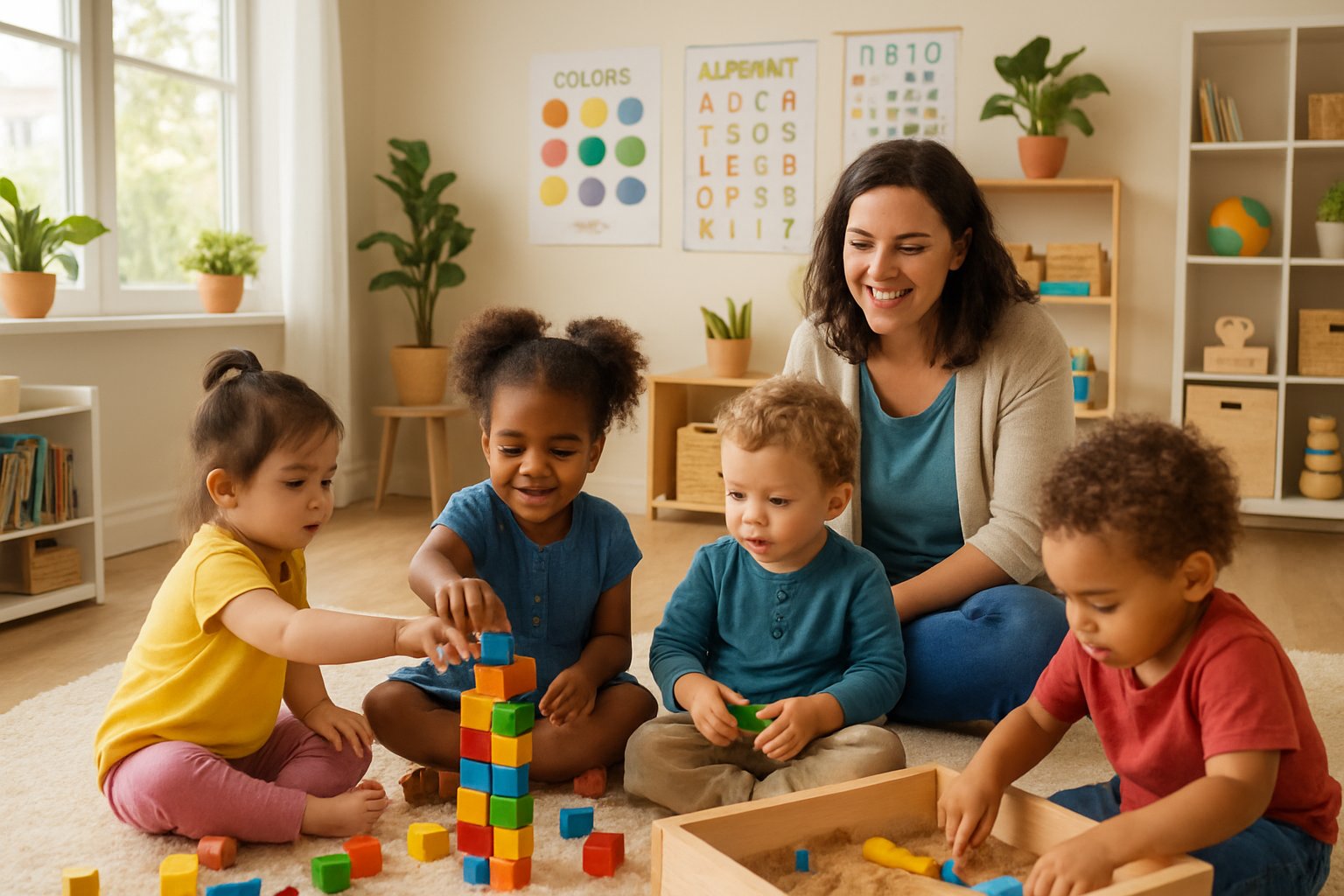
Limiting screens during early childhood years helps toddlers develop better social skills, creativity, and problem-solving abilities. Too much screen time can slow down important brain development and reduce hands-on learning opportunities.
Benefits of Limiting Screen Time
Children who spend less time on screens show stronger social skills and better attention spans. Research shows that toddlers who engage in more unstructured play are 40% more likely to demonstrate improved problem-solving abilities compared to those with too much screen time.
Screen-free time helps toddlers learn to focus on one task for longer periods. They practice waiting, sharing, and taking turns during play.
Key benefits include:
- Better sleep patterns
- Improved eye contact during conversations
- Stronger ability to play alone
- More physical activity throughout the day
- Better listening skills
Toddlers also develop stronger relationships with family members when screens are put away. They learn to communicate their needs through words instead of pointing or crying.
Developmental Advantages of Screen-Free Activities
Screen-free learning provides a powerful alternative that nurtures creativity, problem-solving skills, and hands-on engagement. Toddlers use all five senses when they play without screens.
Building with blocks teaches spatial skills and planning. Drawing and coloring strengthen small hand muscles needed for writing later.
Physical development improves through:
- Running and jumping games
- Climbing playground equipment
- Dancing to music
- Playing catch with balls
- Riding tricycles or scooters
Social play teaches toddlers how to share toys and work together. They learn to read facial expressions and body language from other children.
Sensory play with water tables or playdough encourages sharing, teamwork, and joyful learning without any technology needed.
How Too Much Screen Time Impacts Early Childhood
Excessive screen use can delay language development in toddlers. They hear fewer words from real people and miss chances to practice talking.
Too much screen time can harm toddler wellbeing in several important ways. Sleep problems become more common when toddlers use screens close to bedtime.
Negative effects include:
- Shorter attention spans during play
- Less interest in books and reading
- Difficulty sitting still for meals
- More tantrums when screens are removed
- Delayed potty training progress
Toddlers may also show less curiosity about the world around them. They become used to fast-moving images and bright colors from screens.
Physical activity decreases when screen time increases. This can lead to weaker muscles and coordination problems.
Foundational Strategies to Keep Toddlers Engaged Without Screens
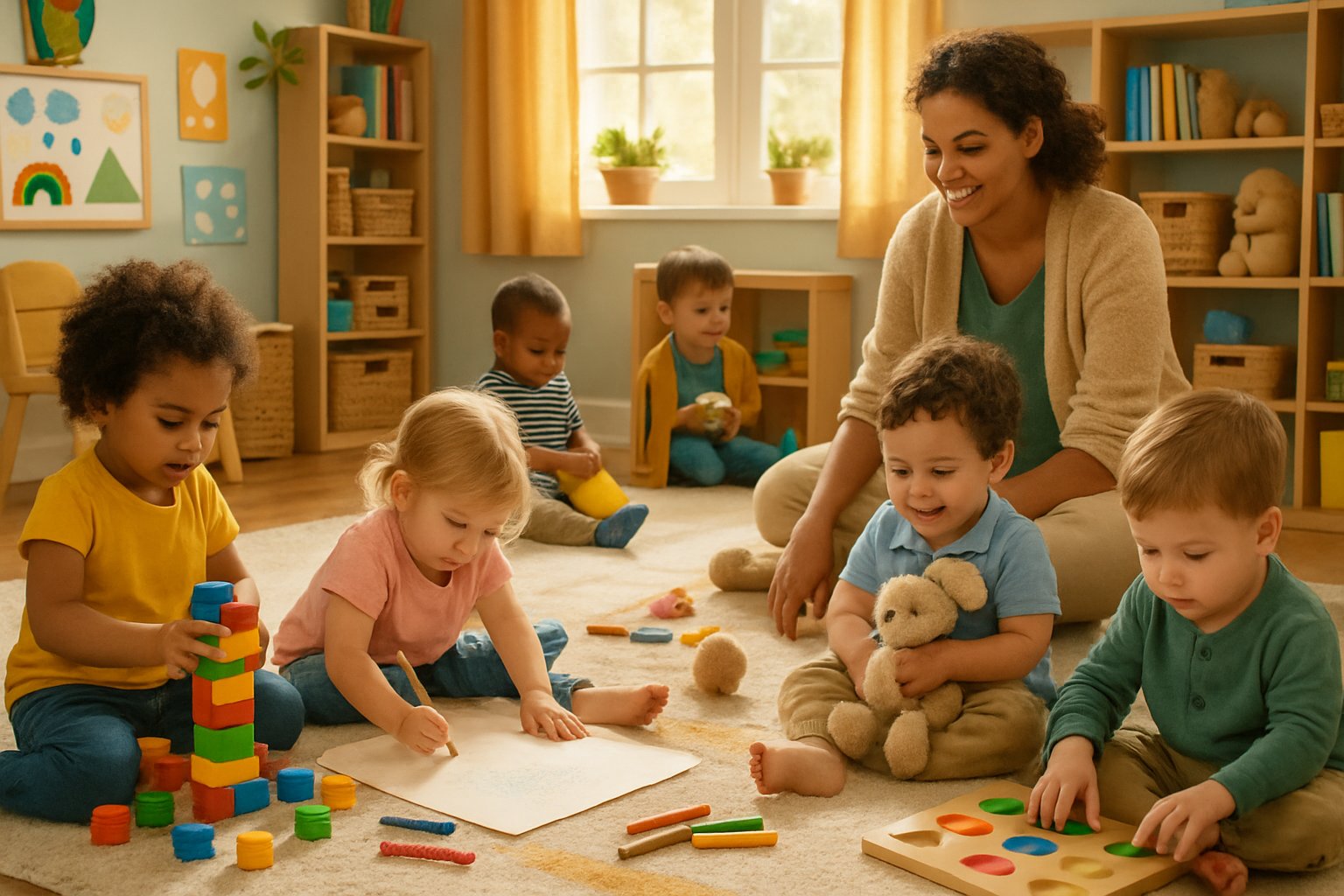
Building consistent daily patterns, creating space for self-directed exploration, and keeping toys fresh forms the backbone of successful screen-free engagement. These core approaches work together to help toddlers develop focus and creativity while giving parents manageable structure.
Establishing Daily Routines
Predictable schedules create security for toddlers and make screen-free time easier to manage. When children know what comes next, they adapt faster to activities without screens.
Parents should pick specific times each day for screen-free activities. Morning play sessions work well when toddlers have more energy.
After-lunch quiet time helps them wind down naturally.
Key routine elements include:
- Same time each day for independent play
- Clear transitions between activities
- Consistent duration (start with 10-15 minutes)
- Simple verbal cues like “now it’s your play time”
The routine should match the child’s natural energy patterns. Some toddlers focus better in the morning.
Others need active play before they can settle into quieter activities. Consistency matters more than perfection.
Even short periods of structured screen-free time help toddlers learn what to expect and how to engage with their environment.
Encouraging Independent Play
Independent play builds confidence when toddlers learn they can entertain themselves. This skill develops gradually with the right support and environment.
Parents can start by playing alongside their toddler, then slowly stepping back. This helps children feel secure while learning to direct their own activities.
Effective strategies include:
- Starting play together, then moving nearby
- Asking open questions like “what happens next?”
- Staying visible but not actively participating
- Letting toddlers lead their own exploration
The physical space matters too. A designated play area with soft surfaces gives toddlers room to move and explore safely.
Too many toy choices can overwhelm them, so keeping options simple works better. Short attention spans are normal.
Toddlers might only play independently for a few minutes at first, but this builds over time with practice.
Rotating Toys and Activities
Fresh activities capture toddler attention better than the same toys every day. Rotating what’s available keeps children curious and engaged without needing screens.
Parents can store most toys and bring out just a few at a time. This makes each toy feel new again when it reappears after being stored away.
Rotation tips:
- Keep 3-5 toys accessible at once
- Store the rest in bins or closets
- Switch toys every 3-7 days
- Include different types (building, sorting, pretend play)
- Watch which activities hold attention longest
Simple household items often work as well as expensive toys. Cardboard boxes, wooden spoons, and measuring cups can spark creativity and exploration.
Activities for toddlers work best when they match developmental needs. Toddlers need sensory input and love repetition, so activities that let them touch, stack, and repeat actions keep them engaged naturally.
Creative Play Ideas to Stimulate Toddler Imagination
Imagination-based activities help toddlers develop language skills, emotional understanding, and creative thinking. These activities use everyday items and simple storytelling to create engaging experiences that build important developmental skills.
Pretend Play and Role-Playing
Pretend play allows toddlers to explore different roles and situations safely. They can pretend to be doctors, teachers, or parents using simple props from around the house.
A cardboard box becomes a car, spaceship, or house. Kitchen utensils turn into medical tools.
Old clothes become costumes for different characters.
- Doctor’s Office: Use a toy stethoscope and bandages to “treat” stuffed animals
- Restaurant: Set up a pretend kitchen with play food and take orders
- Store Clerk: Create a mini grocery store with empty boxes and play money
Activities that encourage creative thinking help toddlers learn problem-solving skills. They practice social situations and learn to express emotions through different characters.
Role-playing also builds empathy. When toddlers pretend to be someone else, they start to understand different perspectives and feelings.
Story Time for Building Language Skills
Reading stories together creates rich language experiences for toddlers. They hear new words, learn sentence patterns, and understand how stories work.
Interactive reading works better than passive listening. Ask simple questions about the pictures and characters.
Let toddlers point to objects or make animal sounds.
- Use different voices for each character
- Let toddlers turn the pages
- Ask “What happens next?” questions
- Repeat favorite books multiple times
Picture books with simple plots work best for toddlers. They can follow along easily and predict what comes next.
Repetitive books help them memorize words and phrases. Play fosters creativity and imagination by helping toddlers explore feelings and test new ideas.
Story time gives them safe ways to experience different emotions and situations.
DIY Puppet Shows and Storytelling Sessions
Simple puppets create magical storytelling experiences. Sock puppets, paper bag puppets, or finger puppets work perfectly for toddlers.
Parents can make puppets talk and move while telling stories. This captures toddler attention better than regular storytelling.
The puppets become real characters in their minds.
- Sock Puppets: Add buttons for eyes and yarn for hair
- Paper Bag Puppets: Draw faces on lunch bags
- Finger Puppets: Use markers to draw on fingertips
Toddlers can help create the puppets and choose what happens in the stories. They might want the puppet to go to the park or eat their favorite food.
Behind-the-scenes puppet work builds fine motor skills. Moving the puppets and making them talk helps with hand coordination and language development.
Creative activities for toddlers build imagination and keep children engaged through hands-on play. Puppet shows combine storytelling with movement and creativity.
Active and Sensory Activities for Busy Toddlers
Toddlers need hands-on experiences that engage their developing senses while burning physical energy. These activities use common household items to create rich learning environments that satisfy their natural curiosity.
Sensory Play with Everyday Materials
Parents can create engaging sensory bin experiences using rice, dried beans, or pasta as base materials. Large containers filled with these items provide endless exploration opportunities.
Hidden small toys within the sensory materials encourage digging and discovery. Measuring cups, spoons, and small containers extend playtime while developing fine motor skills.
Texture exploration boards offer another sensory option. Parents can attach fabric scraps, sandpaper, bubble wrap, and corrugated cardboard to sturdy boards.
These materials help toddlers learn descriptive words like “rough,” “soft,” and “bumpy.” The tactile input supports brain development and can calm overstimulated children.
Kitchen items make excellent sensory tools. Empty containers with lids create sorting activities by size or shape.
Wooden spoons and metal bowls become musical instruments that develop auditory discrimination.
Water Play for Exploration and Fun
Water play adventures naturally calm restless energy while teaching cause and effect relationships. Shallow bins filled with water provide safe exploration spaces.
Essential water play tools include:
- Cups for pouring practice
- Funnels for precision activities
- Floating toys for imaginative play
- Washcloths for cleaning and wringing
Parents should place towels around play areas to manage inevitable spills. Moving water activities outside eliminates cleanup concerns entirely.
Ice cubes filled with colored water add visual interest. Toddlers can watch them melt while observing color changes and temperature differences.
Simple floating and sinking experiments satisfy natural curiosity. Household items like spoons, corks, and small toys demonstrate basic scientific principles through hands-on discovery.
Indoor Obstacle Course Setups
Household obstacle courses challenge gross motor skills while burning excess energy. Pillows, cushions, and furniture create safe navigation challenges.
Basic course elements include:
- Tape lines on floors for walking practice
- Pillow jumps for coordination
- Under-table crawling spaces
- Cushion balance beams
Parents can modify courses daily to maintain interest. Simple changes like rearranging pillows or adding new tape patterns create fresh challenges.
Masking tape works well for floor patterns. Hopscotch designs, straight lines, and curved paths encourage different movement patterns without damaging surfaces.
Safety remains the top priority. All furniture used should be stable and age-appropriate.
Soft landing surfaces like pillows prevent injuries from inevitable tumbles. These courses develop spatial awareness and problem-solving skills.
Toddlers learn to plan movements and navigate physical challenges independently.
Hands-On Adventures and Learning Through Play
Active exploration and discovery games transform ordinary moments into exciting learning opportunities. These adventures help toddlers develop observation skills, pr