
Play-based learning transforms how children develop essential skills during their most critical growth years. While many parents and teachers understand that play is important, they often miss the specific techniques that maximize its educational benefits.
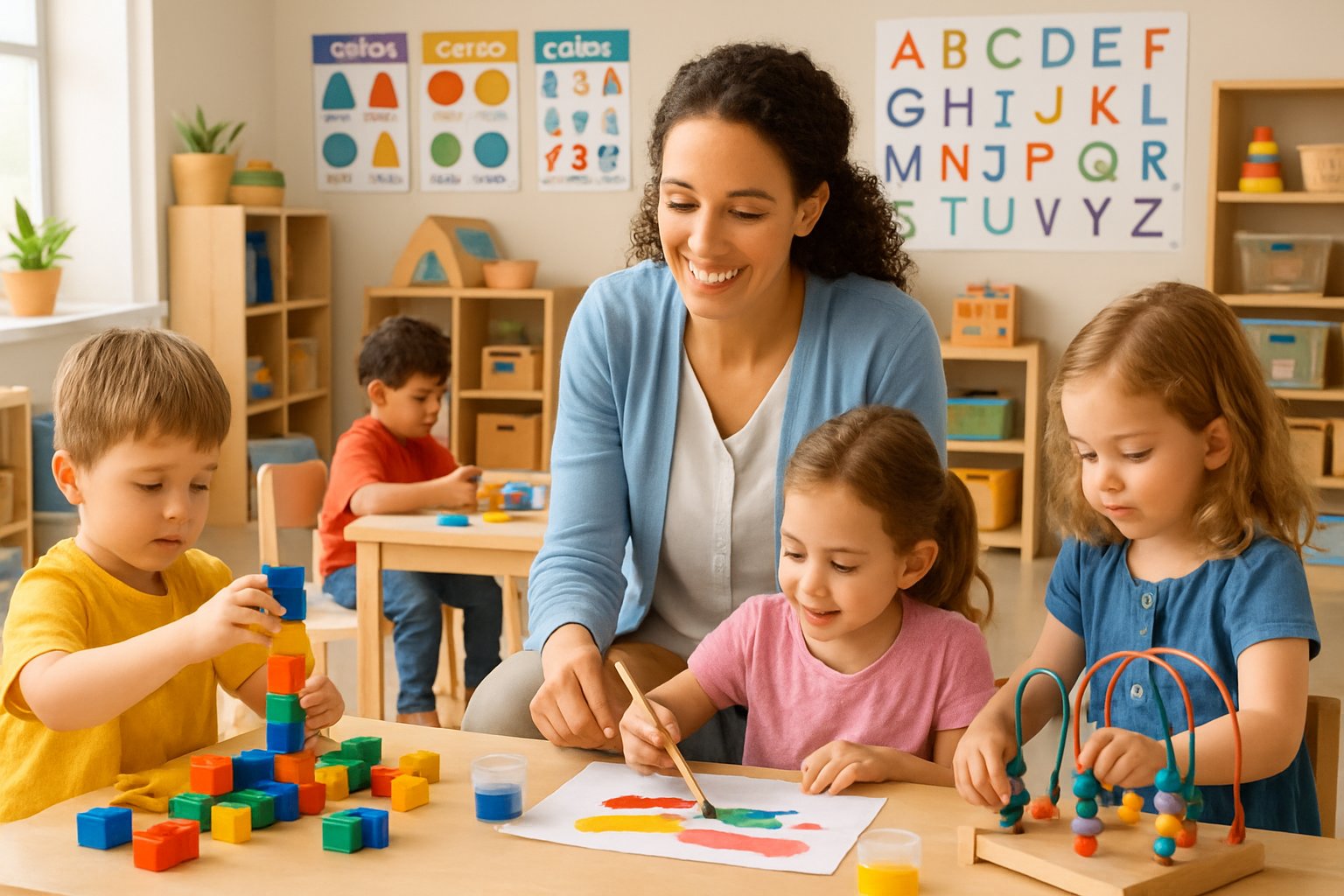
Research shows that structured play activities can enhance children’s cognitive abilities, social skills, and emotional regulation more effectively than traditional teaching methods alone. Children who engage in play-based learning develop 21st century skills including collaboration, communication, and critical thinking while building confidence naturally.
The key lies in understanding how to blend fun activities with learning goals. When adults know which play strategies work best for different developmental areas, they can create experiences that feel like pure enjoyment to children while secretly building crucial skills.
Key Takeaways
- Play-based learning combines fun activities with educational goals to develop cognitive, social, and emotional skills more effectively than traditional methods
- Different types of play target specific developmental areas, from imaginative play for creativity to physical play for motor skills
- Parents and educators can maximize learning outcomes by using structured play techniques while maintaining the natural joy of childhood exploration
Play-Based Learning: Core Principles and Approach
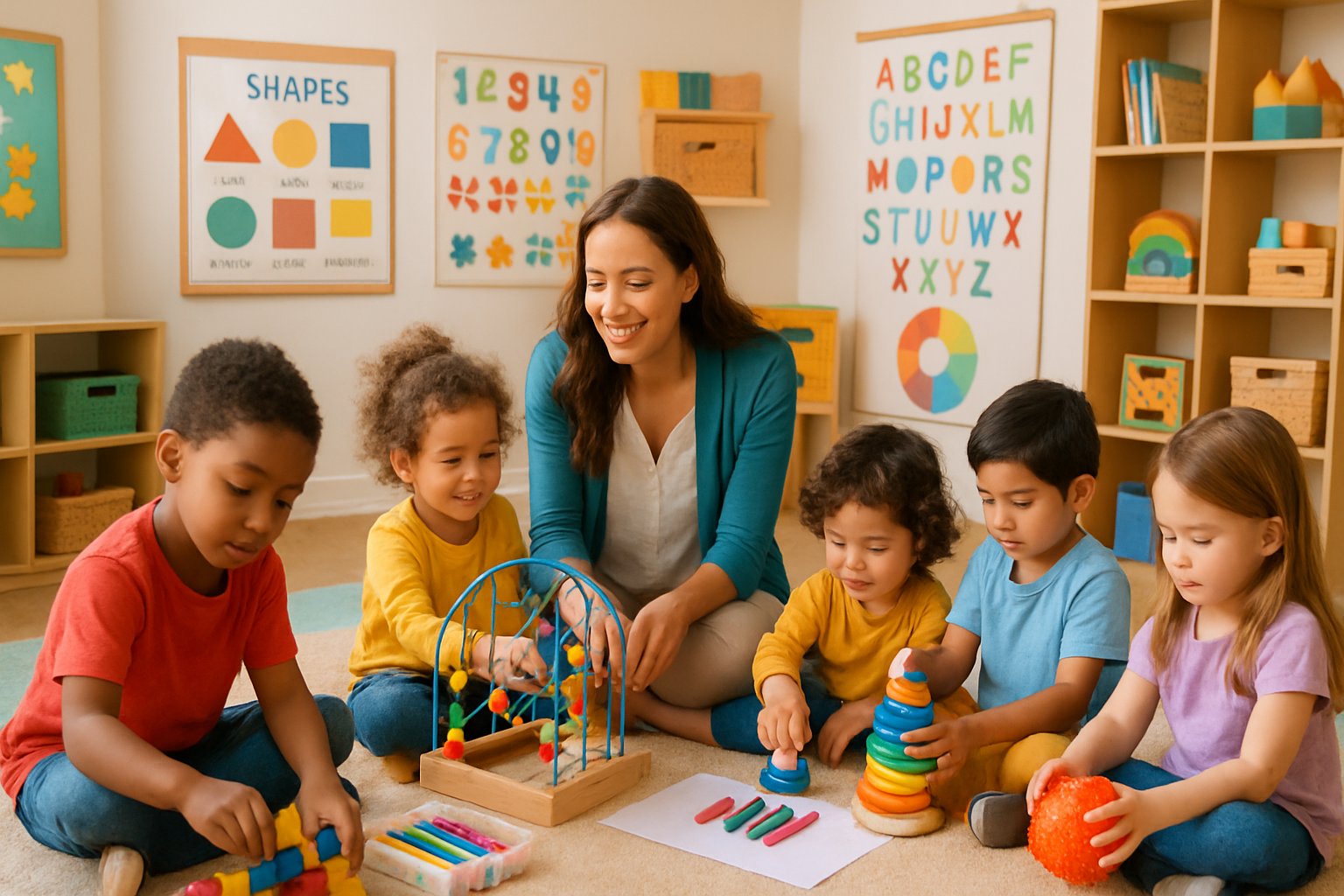
Play-based learning approaches center on children’s natural curiosity and engagement to drive educational outcomes. This method distinguishes itself through child-directed activities, hands-on exploration, and integrated skill development that contrasts sharply with worksheet-focused instruction.
What Makes Play-Based Learning Unique
Play-based learning harnesses children’s innate drive to explore and discover. Unlike passive learning methods, this approach positions children as active learners who construct knowledge through direct experience.
The method recognizes that young children naturally learn through play. Teachers act as facilitators rather than lecturers.
They create environments where learning happens organically through exploration. Child development research shows that play supports multiple developmental domains simultaneously.
Children develop social skills while learning academic concepts. They build emotional regulation while practicing problem-solving.
This approach respects children’s developmental stages. It acknowledges that abstract concepts become concrete through hands-on manipulation.
Mathematical ideas emerge through block building. Language skills develop through dramatic play scenarios.
The uniqueness lies in the integration of joy with learning objectives. Children remain engaged because activities feel like play rather than work.
Fundamental Elements of Play-Based Education
Child Agency forms the cornerstone of effective play-based education. Children make meaningful choices about their activities and learning paths.
This autonomy increases engagement and ownership of the learning process. Intentional Environment Design creates spaces that promote exploration and discovery.
Teachers carefully select materials that support learning goals. They arrange spaces to encourage interaction and investigation.
Teacher as Guide represents a shift from director to facilitator. Educators observe children’s interests and extend learning through strategic questioning.
They introduce new materials or concepts based on children’s demonstrated readiness. Integrated Learning occurs when multiple skill areas develop simultaneously.
A single play activity might address:
- Language development through conversation
- Math concepts through counting and sorting
- Social skills through cooperation
- Fine motor skills through manipulation
Assessment Through Observation replaces traditional testing methods. Teachers document learning through photographs, notes, and work samples collected during natural play situations.
Differences Between Play-Based and Traditional Learning
| Play-Based Learning | Traditional Learning |
|---|---|
| Child-directed exploration | Teacher-led instruction |
| Hands-on materials | Worksheets and textbooks |
| Integrated skill development | Subject-specific lessons |
| Learning through discovery | Learning through memorization |
| Assessment via observation | Standardized testing |
Play-based approaches prioritize process over product. Children engage in extended exploration rather than completing predetermined tasks.
Traditional methods often separate subjects into distinct time blocks. Play-based learning in early childhood naturally integrates literacy, mathematics, science, and social studies within meaningful contexts.
The pace differs significantly between approaches. Play-based learning allows children to spend extended time on topics that capture their interest.
Traditional schedules move according to predetermined timelines regardless of student engagement. Motivation sources vary dramatically.
Play-based learning relies on intrinsic motivation driven by curiosity and joy. Traditional approaches often depend on external rewards and consequences to maintain student participation.
Types of Play in Early Childhood Development
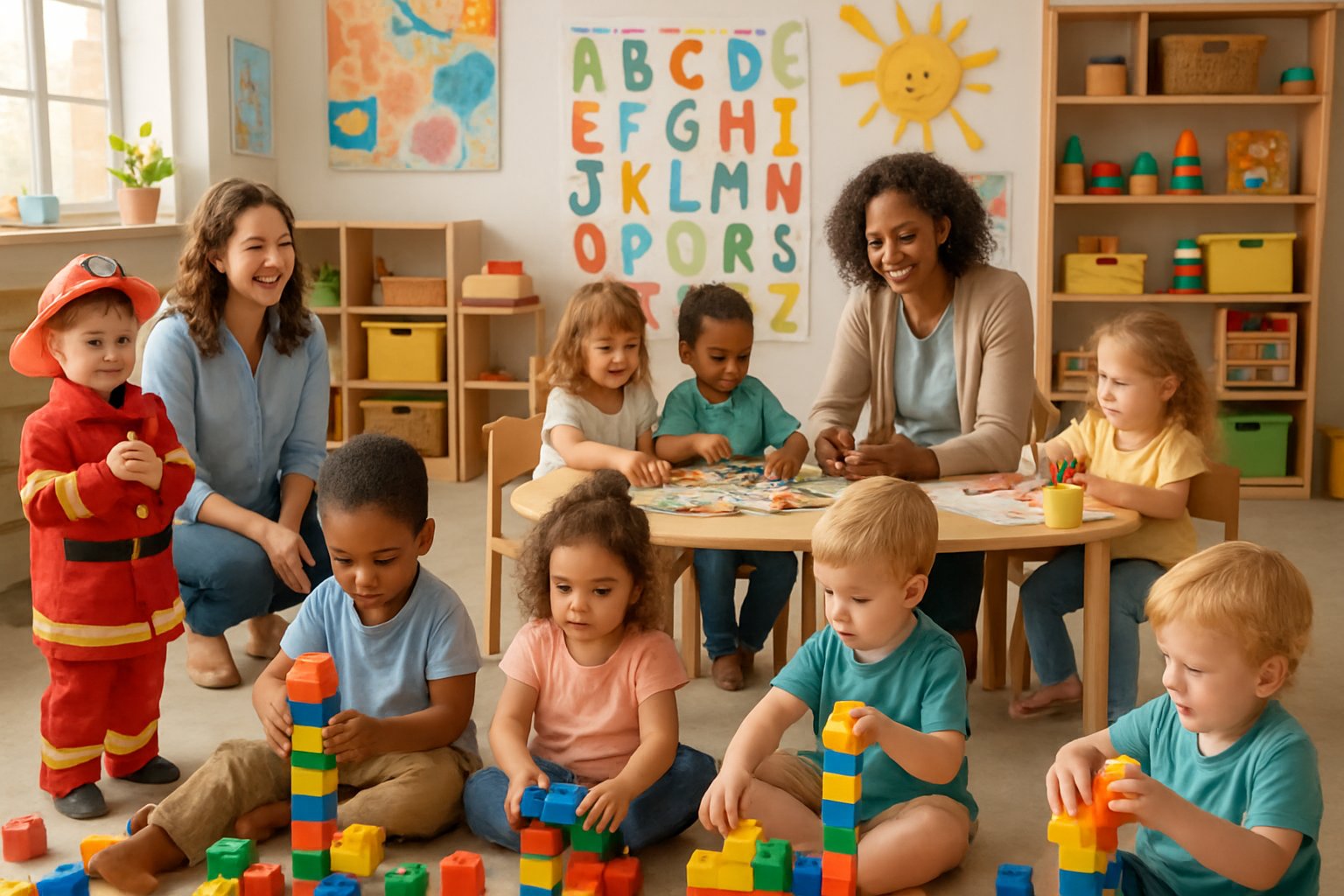
Different types of play serve unique purposes in child development. Each approach offers specific benefits for cognitive growth, social skills, and creative thinking.
Free Play and Open-Ended Play
Free play gives children complete control over their activities. Kids choose what to do, how to do it, and when to stop without adult direction.
This type of play builds independence and decision-making skills. Children learn to solve problems on their own and develop confidence in their abilities.
Benefits of free play include:
- Better creativity and imagination
- Stronger problem-solving skills
- More self-confidence
- Better emotional control
Open-ended play uses materials without specific rules or outcomes. Blocks, art supplies, and natural items like sticks and stones work well for this type of play.
These activities let children explore ideas without pressure to create something specific. A cardboard box can become a house, car, or spaceship based on the child’s imagination.
Research shows that children actively and imaginatively engage with people, objects and the environment during open-ended activities.
Guided Play for Learning Goals
Guided play combines child interest with adult support to reach learning goals. Teachers or parents join the play while letting children lead the activity.
Adults ask questions and provide hints to help children discover new concepts. This approach teaches specific skills while keeping play fun and engaging.
Key features of guided play:
- Child chooses the activity
- Adult provides gentle guidance
- Learning happens naturally
- Fun remains the main focus
A teacher might join a pretend grocery store game to practice counting money. They follow the child’s lead but add learning moments when appropriate.
This method works well for teaching math, science, and language skills. Children learn without feeling like they are in a formal lesson.
Guided play helps bridge the gap between free play and structured learning activities.
Structured Play and Its Role
Structured play follows specific rules and has clear goals. Board games, sports, and organized group activities fall into this category.
This type of play teaches children to follow directions and work within limits. Kids learn that rules help everyone have fun and stay safe.
Structured play develops:
- Rule-following abilities
- Turn-taking skills
- Teamwork and cooperation
- Focus and attention
Games like “Red Light, Green Light” teach self-control and listening skills. Simple board games help children practice counting and following sequences.
Teachers often use structured play to teach specific concepts. A matching game might focus on colors, shapes, or letters depending on the learning goal.
The key is balancing structure with enjoyment. Too many rules can make play feel like work rather than fun.
Imaginative and Pretend Play
Imaginative play lets children create stories and explore different roles. They might pretend to be doctors, teachers, or characters from their favorite books.
This type of play develops language skills as children create dialogue and narrate their actions. They practice using new words in meaningful contexts.
Pretend play benefits include:
- Better language development
- Stronger social skills
- Emotional understanding
- Creative thinking abilities
Children often work through real-life experiences during pretend play. Playing “doctor” might help them feel less scared about medical visits.
Role-playing with others teaches negotiation and compromise. Children must agree on roles, rules, and storylines to keep the play going.
Dress-up clothes, play kitchens, and toy figures support this type of play. Simple props often work better than elaborate toys because they leave more room for imagination.
Cognitive Benefits of Play-Based Learning
Play-based learning enhances children’s thinking abilities through hands-on exploration and discovery. Children develop stronger reasoning skills, improve their ability to communicate ideas, and build mental flexibility through engaging activities.
Enhancing Critical Thinking and Problem-Solving Skills
Children naturally develop analytical abilities when they engage in play-based learning activities. They face challenges that require them to think logically and create strategies to overcome obstacles.
Building with blocks teaches children to plan and test different approaches. When a tower falls down, they must figure out why it happened and how to build it better next time.
Imaginative play scenarios push children to navigate complex situations. They create storylines, solve character problems, and adapt when their play partners introduce new challenges.
Research shows that children who engage in complex play activities develop stronger problem-solving abilities. These skills transfer directly to academic subjects like math and science.
Games with rules teach children to think several steps ahead. They learn to anticipate consequences and make decisions based on available information.
Supporting Language and Communication Skills
Play provides rich opportunities for children to practice speaking and listening. They negotiate roles, explain their ideas, and engage in back-and-forth conversations during play activities.
Dramatic play particularly boosts vocabulary development. Children use new words as they act out different characters and situations.
They experiment with different ways of expressing themselves. Storytelling during play helps children organize their thoughts.
They learn to sequence events, describe emotions, and create coherent narratives that others can follow. Group play activities require children to communicate clearly to be understood.
They must ask questions, give directions, and explain their reasoning to peers. Language acquisition improves when children engage in both guided and free play.
Teachers can support this development by introducing new vocabulary during play interactions.
Building Cognitive Flexibility and Creativity
Children develop mental agility through varied play experiences. They learn to switch between different ideas, adapt to changing situations, and think about problems from multiple angles.
Role-playing activities help children see situations from different perspectives. They practice empathy while building their ability to understand various viewpoints and social contexts.
Creative play with open-ended materials encourages innovative thinking. Children combine ideas in new ways and discover multiple solutions to the same challenge.
Play-based learning supports executive functioning skills like working memory and attention control. Children must hold multiple ideas in mind while adapting to new information.
Benefits of Cognitive Flexibility Through Play:
| Skill Area | Play Activity | Cognitive Benefit |
|---|---|---|
| Mental switching | Musical chairs | Quick adaptation to rule changes |
| Creative thinking | Art exploration | Multiple solution finding |
| Perspective-taking | Dress-up play | Understanding different viewpoints |
Children who engage in diverse play activities show greater creativity in academic tasks. They approach learning with curiosity and confidence in their ability to find solutions.
Fostering Social and Emotional Growth
Play-based learning creates natural opportunities for children to develop essential social skills, build emotional intelligence, and learn collaboration. These experiences help young learners navigate relationships and understand their own emotions.
Developing Social Skills Through Play
Play provides children with countless chances to practice basic social skills. They learn to take turns during board games and share toys with friends.
Children develop communication skills by talking with peers during play activities. They practice asking questions, giving directions, and expressing their ideas clearly.
Key social skills developed through play:
- Taking turns and sharing
- Following rules and instructions
- Resolving conflicts peacefully
- Making friends and joining groups
- Respecting others’ ideas and feelings
Play-based learning promotes social skills as children interact with peers and practice communication. Group activities teach children how to work together toward common goals.
Children learn to negotiate roles during pretend play. One child might say “I’ll be the doctor and you be the patient.” This teaches them how to compromise and work together.
Nurturing Empathy and Emotional Intelligence
Role-playing games help children understand different perspectives. When they pretend to be teachers, parents, or animals, they learn to see the world through other eyes.
Children practice recognizing emotions in themselves and others during play. They learn to identify when someone feels sad, happy, or frustrated.
Emotional skills developed through play:
- Emotion recognition – naming feelings in self and others
- Emotional regulation – managing strong feelings appropriately
- Empathy building – understanding others’ experiences
- Problem-solving – finding solutions to emotional conflicts
Play helps children express and regulate their emotions in safe, supportive settings. They learn healthy ways to handle disappointment, excitement, and frustration.
Pretend play scenarios allow children to work through difficult emotions. They might act out family situations or practice dealing with fears.
Collaboration and Teamwork in Group Activities
Group play teaches children how to work together toward shared goals. Building blocks, cre