
Flying with toddlers can feel overwhelming, especially when navigating busy airports with cranky little ones in tow. Nearly half of parents describe traveling with children as a stressful experience, according to recent surveys.
The good news is that many U.S. airports have stepped up their game to accommodate families.
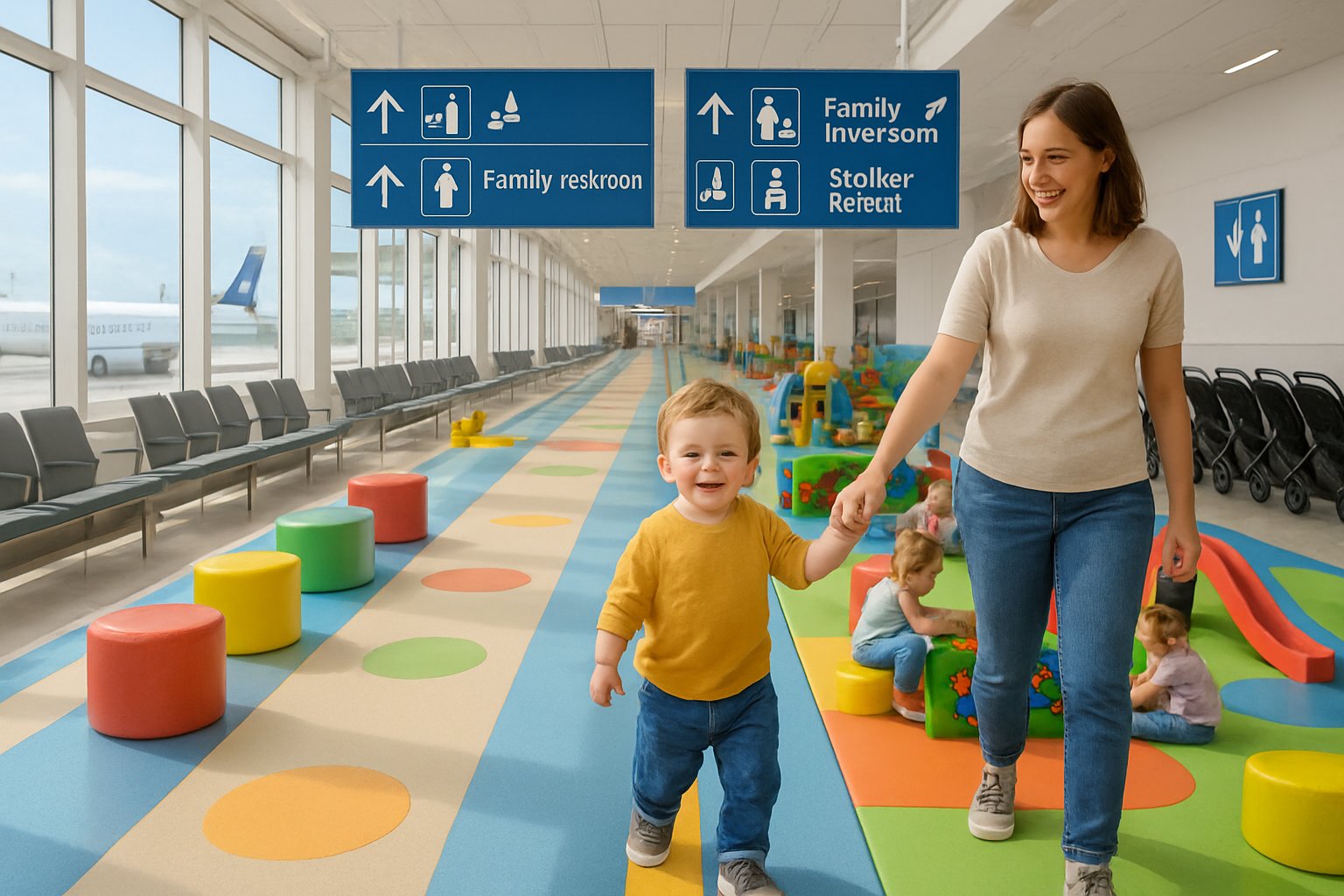
Los Angeles International Airport (LAX) ranks as the most kid-friendly airport in the U.S., offering fast Wi-Fi, plenty of charging stations, and dedicated play areas for children.
Other top contenders include LaGuardia Airport and Boston Logan International Airport, which provide multiple play zones and family-friendly amenities.
From nursing rooms and diaper-changing facilities to interactive play areas that help burn off energy before flights, these airports understand what stressed parents need most during their journey.
Key Takeaways
- LAX leads the nation in toddler-friendly amenities with fast Wi-Fi, charging stations, and dedicated play areas
- Parents prioritize airports with reliable internet and device charging over traditional kid amenities like play areas
What Makes an Airport Toddler-Friendly?
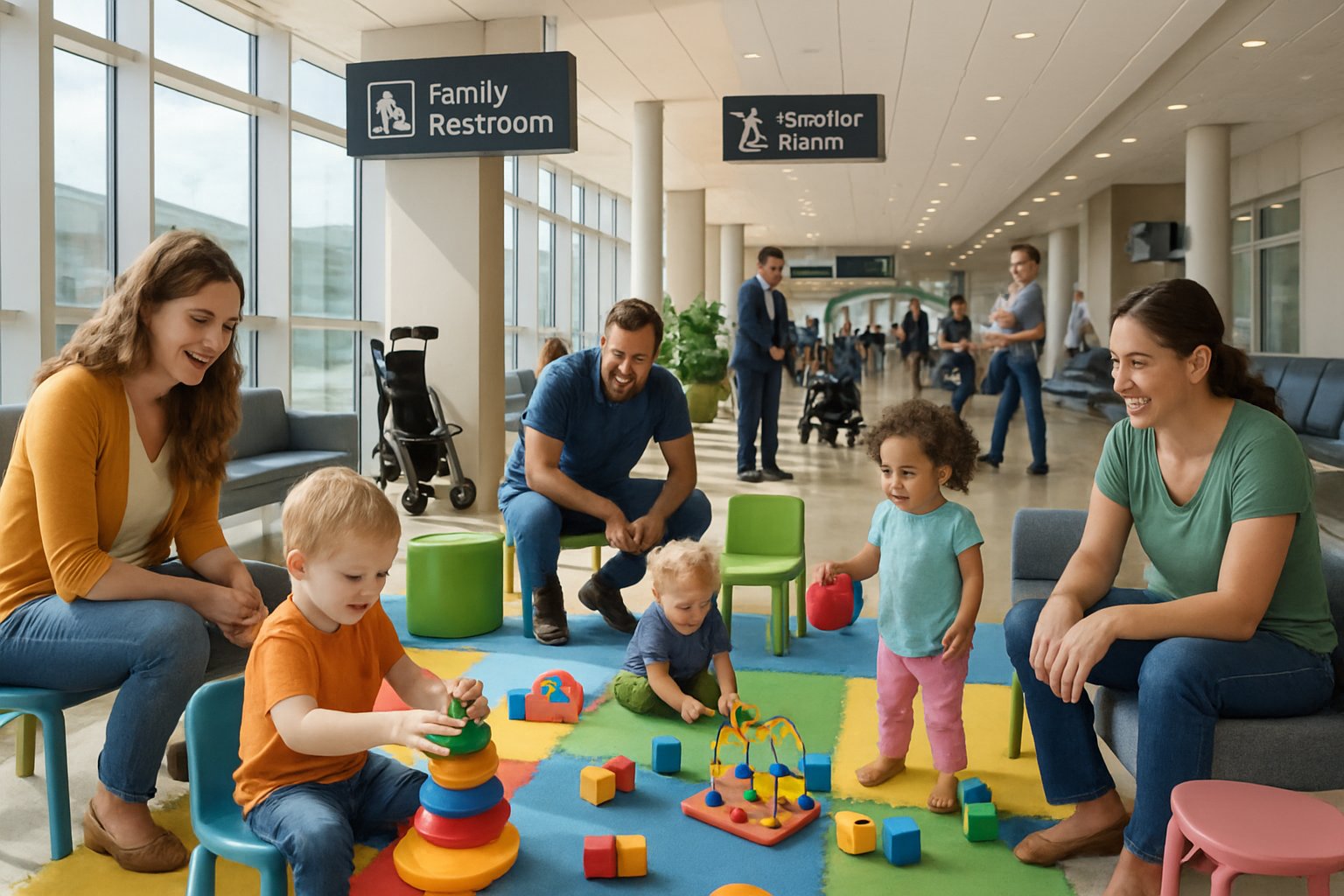
Several key factors determine how well an airport serves families traveling with kids. The most important elements include reliable Wi-Fi and charging stations, dedicated play spaces, and accessible family seating areas throughout terminals.
Key Amenities for Families
Wi-Fi and charging stations rank as the top priority for parents. Research shows that 78% of parents consider fast Wi-Fi access essential when traveling with children.
Nearly 75% emphasize the importance of available charging stations.
Parents rely on electronic devices to keep toddlers entertained during delays and layovers. Tablets and phones loaded with games, videos, and educational apps help manage restless children in busy terminals.
Family restrooms provide essential convenience for parents managing diaper changes and bathroom breaks. These larger spaces accommodate strollers and multiple children.
They often include changing tables and additional privacy.
Nursing rooms offer quiet, private spaces for feeding infants and toddlers. While only 34% of parents prioritize nursing facilities, they remain valuable for families with younger children.
Dining options that cater to children make family travel smoother. Airports with kid-friendly restaurants and quick snack options help parents avoid meltdowns from hungry toddlers.
Importance of Play Areas
Play areas give toddlers space to burn energy before flights. Active children often behave better during air travel when they have opportunities to move around beforehand.
Physical activity helps reduce stress for both children and parents. Running, climbing, and playing tire out energetic toddlers who must sit still during flights.
Only 37% of parents consider play areas important when choosing airports. However, these spaces provide significant benefits during long layovers or flight delays.
Age-appropriate equipment makes play areas most effective. The best facilities include soft play structures, interactive games, and safe surfaces designed for toddlers aged 2-4 years.
Some airports feature themed play areas or educational exhibits that engage children while teaching them about aviation or local culture.
Convenient Family Seating
Family seating areas near gates help parents manage children while waiting for flights. These spaces often include additional outlets for charging devices and room for strollers.
Low passenger density creates a more relaxed environment for families. Airports with fewer crowds per square foot reduce stress for parents managing multiple children and luggage.
Gate areas with open floor plans accommodate families with strollers and car seats. Cramped seating arrangements make family travel more difficult and stressful.
Some terminals designate quiet zones where families can retreat when children become overstimulated. These areas provide calmer environments away from busy walkways and announcements.
Proximity to amenities matters when choosing seating. Families benefit from locations near restrooms, dining options, and play areas to minimize walking distances with tired toddlers.
Top Toddler-Friendly U.S. Airports
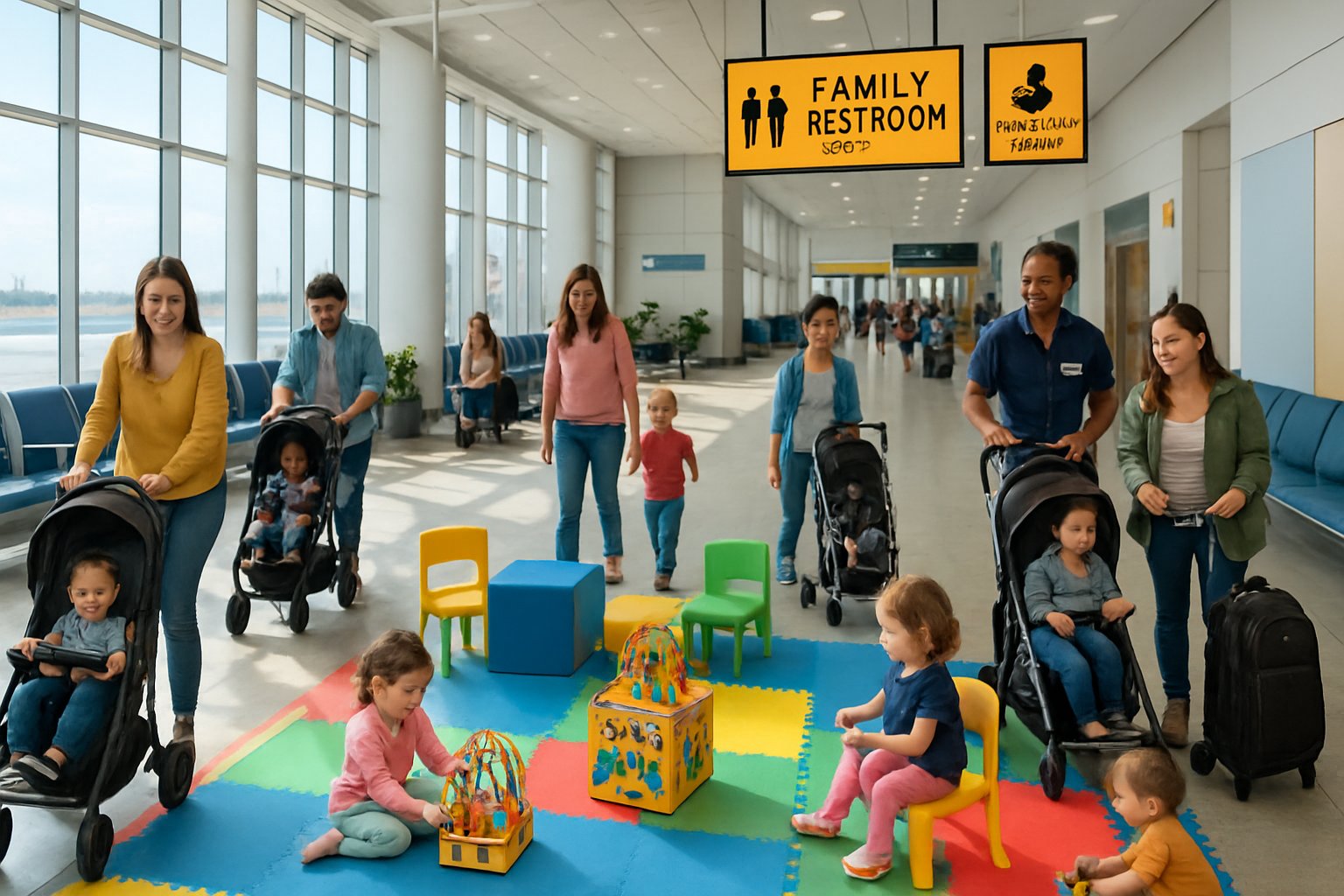
These four airports stand out for their dedicated play areas and family amenities. Each offers unique themed spaces designed specifically for young children and toddlers.
Boston Logan International Airport: Kidport Experience
Boston Logan International Airport ranks third among kid-friendly airports with three designated play areas throughout its terminals. The airport’s signature Kidport experiences provide interactive learning opportunities for toddlers and young children.
Terminal Locations:
- Terminal A: Near gate A18
- Terminal B: Between gates B30 and B36
- Terminal C: Near gate C25
Each Kidport features age-appropriate climbing structures and educational activities. The spaces include soft play equipment designed for toddlers aged 2-5 years old.
Boston Logan maintains a relatively low passenger density compared to other major airports. This creates a more relaxed environment for families traveling with kids.
The airport offers plenty of family restrooms throughout all terminals. Parents can easily find changing stations and nursing areas when needed.
San Francisco International Airport: Multi-Themed Play Spaces
San Francisco International Airport features multiple themed play areas across its terminals. The airport designed these spaces with different age groups in mind, including dedicated toddler zones.
Terminal 2 houses the main children’s play area with aviation-themed equipment. Toddlers can explore miniature airplanes and control towers in a safe environment.
The play spaces include rubber flooring and rounded edges for safety. Parents can supervise easily from nearby seating areas.
Key Features:
- Aviation-themed play equipment
- Toddler-specific climbing structures
- Interactive learning panels
- Adjacent family seating
The airport provides excellent Wi-Fi connectivity throughout all play areas. This allows parents to stay connected while children play safely nearby.
Portland International Airport: Airplane and Animal-Themed Playgrounds
Portland International Airport offers unique play areas that combine aviation themes with local wildlife education. The main playground features a large airplane structure perfect for toddler exploration.
Children can climb through the airplane fuselage and pretend to pilot the cockpit. The equipment meets strict safety standards for ages 2-12 years.
The animal-themed section teaches children about Pacific Northwest wildlife. Interactive displays show local birds, fish, and forest animals.
Play Area Highlights:
- Climbable airplane replica
- Animal education stations
- Toddler-safe climbing walls
- Nature-themed activities
Portland’s family facilities include multiple nursing rooms and family restrooms. The airport maintains clean, well-lit spaces for diaper changes and feeding.
The playground location offers easy access to restaurants and shops. Parents can grab food while keeping children within sight.
Chicago O’Hare International Airport: Kids on the Fly & Family Lounge
Chicago O’Hare features the “Kids on the Fly” exhibit in Terminal 2. This interactive museum-style play area engages toddlers with hands-on aviation activities.
The exhibit includes a real helicopter cockpit where children can pretend to fly. Toddler-friendly buttons and controls provide realistic sounds and lights.
Terminal 2 Features:
- Interactive helicopter cockpit
- Aviation history displays
- Toddler play zones
- Educational activities
O’Hare also offers premium family lounges with dedicated children’s areas. These spaces provide quieter environments for families needing breaks from busy terminals.
The Kids on the Fly area includes comfortable seating for parents. Charging stations allow families to power devices while children explore.
Multiple family restrooms surround the play area for convenience. The airport staff regularly cleans and maintains all family facilities throughout the day.
Other Notable U.S. Airports for Families
Several major airports across the country have invested in specialized play areas, observation decks, and interactive zones designed specifically for young travelers. These airports feature unique attractions like junior aviation programs and dual play zones that help keep children entertained during layovers.
Seattle-Tacoma International Airport: Play Structures and Rest Areas
Seattle-Tacoma International Airport offers multiple dedicated spaces for families traveling with kids. The airport features play structures designed for toddlers and young children in several terminal locations.
Parents can find comfortable seating areas adjacent to the play zones. This allows adults to supervise while resting between flights.
The airport includes family restrooms with changing tables throughout the terminals. These facilities provide extra space for families managing diaper bags and strollers.
Nursing rooms are available for breastfeeding mothers. The rooms offer privacy and comfortable seating away from busy terminal areas.
Charging stations are positioned near family seating areas. This helps parents keep devices powered for entertainment during long waits.
The airport’s design includes wide walkways that accommodate families with strollers. Clear signage helps parents navigate to family-friendly amenities quickly.
Minneapolis–St. Paul International Airport: Dual Creative Play Zones
Minneapolis–St. Paul International Airport features two separate play areas designed for different age groups. The zones provide creative and interactive experiences for children during travel delays.
Terminal 1 houses a play area with climbing structures and interactive panels. The space targets children ages 2-8 with age-appropriate activities and soft play surfaces.
Terminal 2 offers a smaller but equally engaging play zone. This area features educational toys and quiet activities for younger toddlers.
Both play areas include parent seating with clear sight lines to supervise children. The spaces are cleaned regularly throughout the day.
The airport provides family restrooms near each play area. These facilities include changing tables and extra space for managing travel gear.
Free Wi-Fi throughout the terminals helps parents stay connected while children play. The network supports streaming services for additional entertainment options.
Dallas Fort Worth International Airport: Junior Flyer Club and Attractions
Dallas Fort Worth International Airport operates the Junior Flyer Club program for young travelers. Children receive activity booklets and aviation-themed materials during their visit.
The airport features multiple interactive exhibits related to flight and aviation history. These displays engage children while teaching them about air travel.
Outdoor observation areas allow families to watch planes take off and land. The viewing areas include seating and are accessible from multiple terminals.
Terminal D houses a children’s play area with aviation-themed equipment. The space includes climbing structures designed to look like aircraft components.
Family restrooms are located throughout all five terminals. Each facility includes changing tables and extra space for stroller parking.
The airport offers kid-friendly dining options in most terminals. Restaurants provide children’s menus and high chairs for younger travelers.
Baltimore/Washington International Airport: Observation Gallery & Play Zone
Baltimore/Washington International Airport features a dedicated observation gallery on the upper level of the terminal. Families can watch aircraft operations while children learn about different types of planes.
The airport’s play area includes interactive exhibits focused on flight and space exploration. Children can engage with hands-on displays while parents rest nearby.
Comfortable seating areas surround the play zone with charging outlets for electronic devices. The space accommodates families with multiple children and luggage.
The observation gallery provides educational information about aviation and the airport’s operations. Interactive displays explain how flights work and airport safety procedures.
Family restrooms with changing stations are located near both the play area and observation gallery. The facilities include space for wheelchairs and strollers.
The airport offers nursing rooms for breastfeeding mothers. These private spaces include comfortable chairs and electrical outlets for pumps or other equipment.
On-the-Ground Services for Traveling Families
Airports offer specific services to help families navigate terminals more easily with young children. These services include dedicated family facilities and transportation options designed for parents traveling with toddlers.
Family Restrooms, Nursing Rooms, and Child Care Facilities
Family restrooms provide spacious areas where parents can change diapers and help multiple children. These rooms often include baby changing tables, extra space for strollers, and child-sized fixtures.
Many airports now offer dedicated nursing rooms for breastfeeding mothers. Memphis International Airport leads U.S. airports with five nursing rooms, while other major airports typically provide one to three locations.
Some airports feature family lounges with play areas. Chicago O’Hare’s Family Lounge in Terminal 2 includes colorful seating, device charging stations, and stroller parking.
Key Family Facilities:
- Private nursing stations with comfortable seating
- Family restrooms with changing tables
- Stroller storage areas
- Baby care vending machines with diapers and formula
Car Rental and Transportation Options for Families
Car rental companies at airports provide family-friendly vehicle options and services. Most major rental agencies offer child car seats, booster seats, and stroller rentals for an additional fee.
Parents should reserve car seats in advance, as availability can be limited during busy travel periods. Rental companies typically charge $10-15 per day for car seats.
Airport shuttles and ride-sharing services also accommodate families. Many airports offer family-sized shuttle vehicles or priority boarding for passengers traveling with kids.
Transportation Options:
- Car rental with child safety equipment
- Family-friendly shuttle services
- Ride-sharing with car seat options
- Airport taxi services with booster seats
Best Airlines for Families in the U.S.
Several U.S. airlines stand out for their family-friendly services, with specific policies for seating families together and priority boarding. Many carriers also offer loyalty programs that help families save money on future travel through strategic point accumulation.
JetBlue: Family-Friendly Policies and Amenities
JetBlue ranks as one of the top airlines for family travel according to recent industry evaluations. The airline provides free entertainment systems with kid-friendly programming on every seat.
Key JetBlue Family Benefits:
- Free snacks and beverages for all passengers
- Individual seatback entertainment screens
- No change fees for most fares
- Free Wi-Fi on all flights
JetBlue allows families to check strollers and car seats at no extra cost. The airline’s spacious cabin layout provides more legroom than many competitors.
The carrier offers special assistance for families traveling with infants. Parents can request bassinets on eligible aircraft for long flights.
Family Seating and Early Boarding Options
Most major U.S. airlines now guarantee family seating policies that keep parents and children together. American Airlines, United, and Delta lead in this area.
Family Boarding Priorities:
- Southwest: Family boarding between A and B groups
- American: Priority boarding for families with children under 2
- United: Family boarding after Group 2
- Delta: Family boarding with Sky Priority
Airlines typically allow families with young children to board early. This gives parents extra time to get settled and store carry-on items.
JetBlue provides family boarding for passengers traveling with children under 2 years old. The airline seats families together automatically when possible during booking.
Earning and Using Points and Miles for Family Travel
Airline loyalty programs help families reduce travel costs through strategic point earning. Most programs allow point pooling among family members.
Best Family Loyalty Features:
- American AAdvantage: Family pooling up to 8 members
- United MileagePlus: Award pooling for immediate family
- Delta SkyMiles: Pay with Miles option reduces cash costs
- JetBlue TrueBlue: Points pooling for up to 6 people
Credit card partnerships accelerate point earning for families. Many airline cards offer bonus points on everyday purchases like groceries and gas.
Award tickets for children often cost the same as adult tickets. Booking early provides the best availability for family award travel.
Some airlines offer discounted companion tickets for elite members. These benefits can significantly reduce costs when flying with multiple children.
Practical Tips for Stress-Free Airport Experiences
Successful family travel requires strategic planning around play areas, security procedures, and essential packing. Parents who prepare for these key challenges can turn potentially stressful flights into manageable experiences for toddlers and